How to clean wood decks, composite decking such as Trex and wood or vinyl fences with a pressure washer, at the right PSI, without raising the grain or scarring the boards.
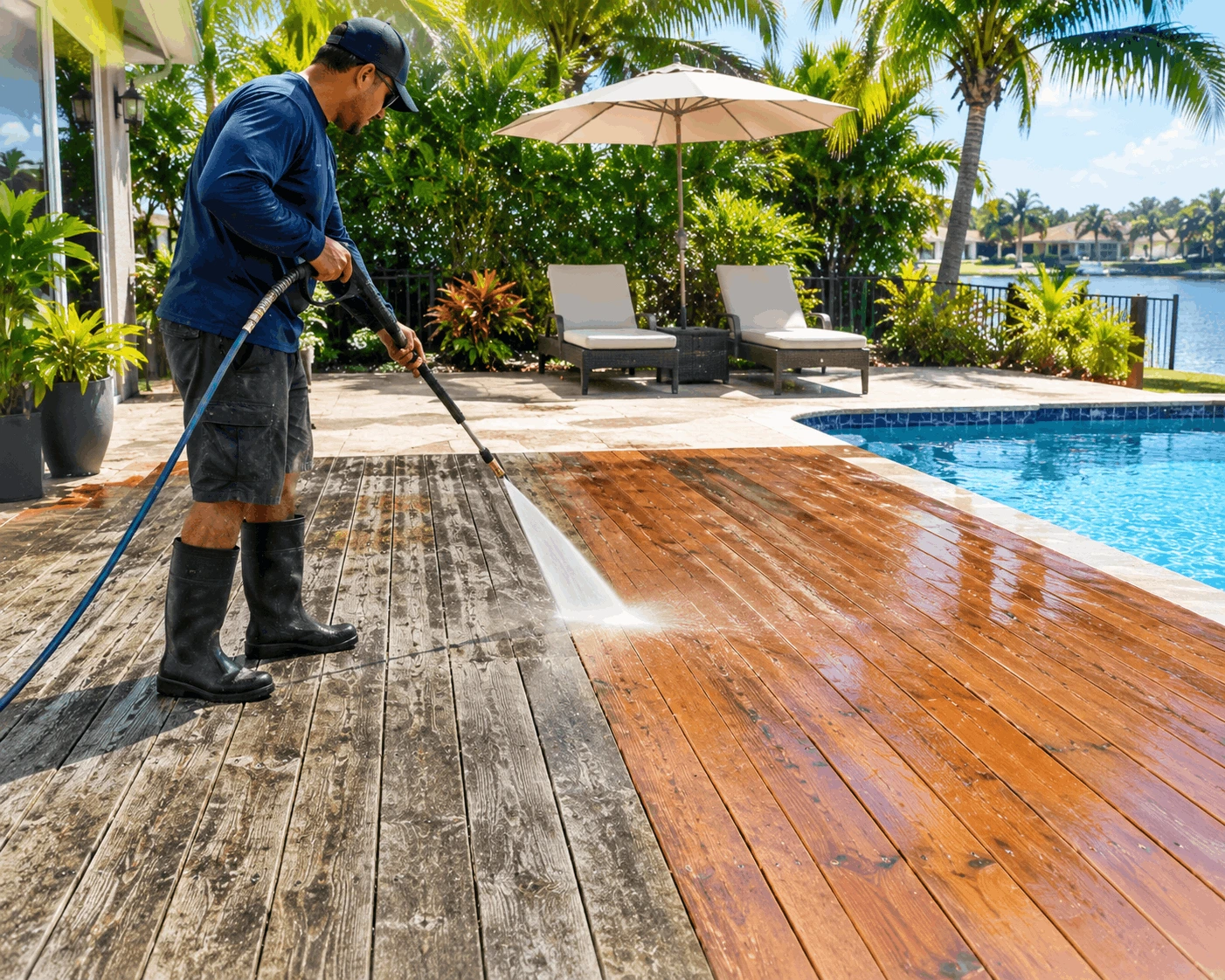
Wood decks and fences should be cleaned at low pressure, roughly 500 to 1,200 PSI, with a 25 to 40-degree fan tip held 8 to 12 inches away and moved with the grain. Composite decking such as Trex tolerates a bit more but is best kept under the manufacturer limit with a wide tip, since hard scouring can scar the surface. A deck cleaner does most of the work; pressure only rinses. Let the boards dry for a couple of days before staining or sealing.
Florida humidity grows mildew on decks and fences quickly, which is why regular gentle washing beats rare aggressive blasting.A deck is the one outdoor surface where the wrong pressure does obvious damage right away. Wood fibers stand up, boards turn fuzzy, and deep gouges show up as pale lines that stain will never hide. We have seen it many times: a homeowner tries to blast off gray weathering with a driveway setting and ends up with a deck that looks worse than before.
This guide covers how to pressure wash a wood deck, composite decking such as Trex, and a fence, the safest pressure for each, and which cleaners make the machine do less of the work. If you would prefer to leave it to a crew, our residential team handles decks and fences across Broward and Palm Beach counties.
Before you touch the wand, identify what you are cleaning. Treated pine, cedar, hardwoods such as ipe, and composite behave very differently, and the correct settings depend on the surface.
| Surface | Safe pressure range | Nozzle | Best cleaner |
|---|---|---|---|
| Pressure-treated pine | 500-1,200 PSI | 25-40 degree | Oxygen-based or sodium hypochlorite deck cleaner |
| Cedar or redwood | 500-800 PSI | 40 degree | Gentle oxygen-based cleaner |
| Hardwood (ipe, mahogany) | 800-1,200 PSI | 40 degree | Mild cleaner and brightener |
| Composite (Trex and similar) | Low to moderate; follow the manufacturer | 40 degree | Composite cleaner or mild detergent; avoid abrasives |
| Wood fence | 500-1,000 PSI | 40 degree | Fence or deck cleaner |
| Vinyl fence | Low to moderate | 25-40 degree | Mild detergent, soft brush for stubborn marks |
Move furniture, sweep debris, and wet nearby plants. Cover outlets and check for loose nails or screws.
Spray a deck cleaner onto dry boards from the bottom up and let it dwell 10 to 15 minutes. Do not let it dry.
Use a 40-degree tip 8 to 12 inches away, moving along the grain in overlapping strokes.
Rinse thoroughly, then use a deck brightener if the wood looks dull, and let it dry for at least a day or two.
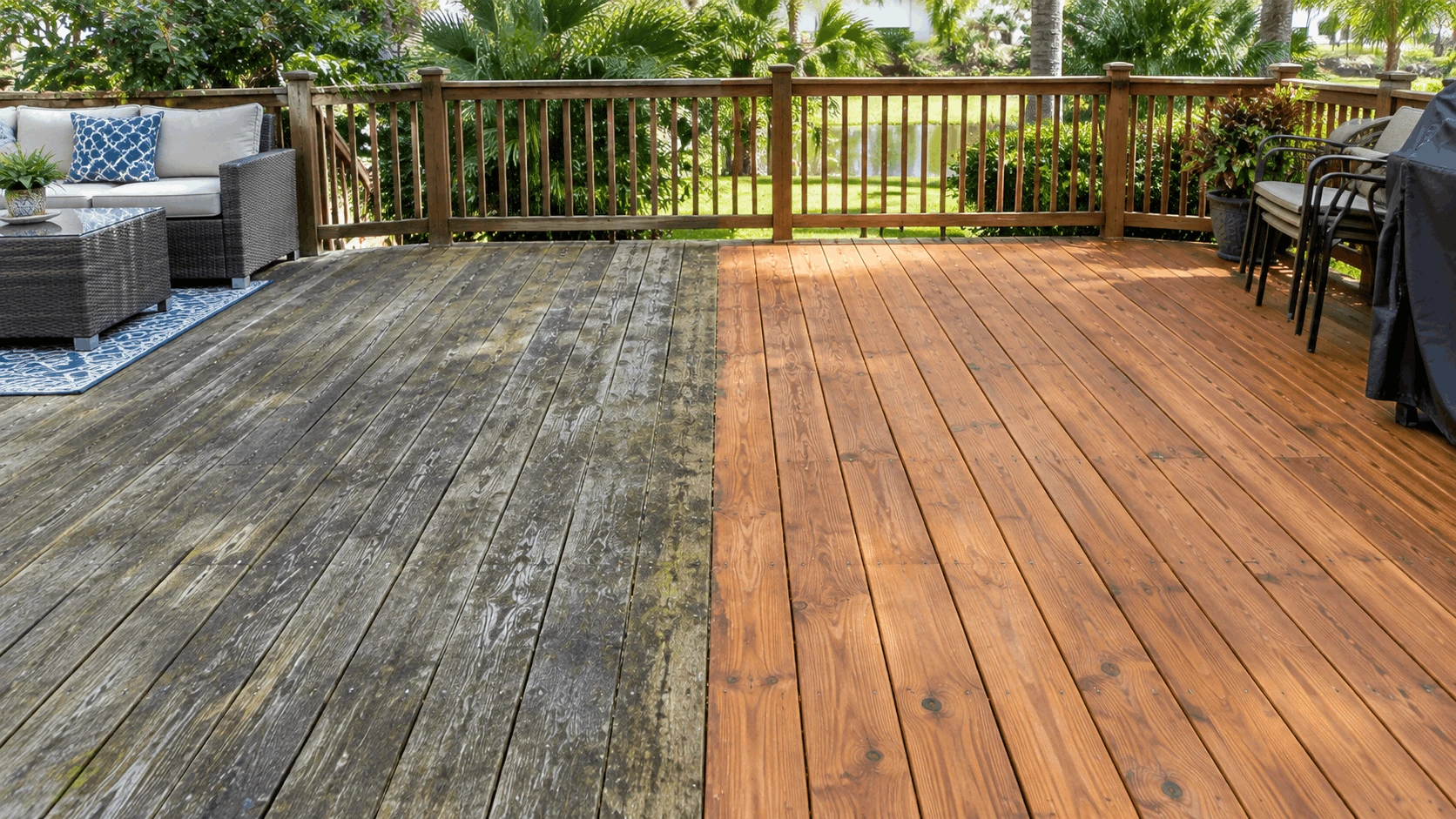
When too much pressure hits wood, the soft spring wood between the rings erodes faster than the hard summer wood, and the surface becomes rough and furry. Sanding can fix it, but it is much better not to cause it. Keep the wand moving, keep the same distance and never use a narrow or zero-degree tip on decking.
Composite looks like it should be indestructible, but it has its own weak points. Cap layers can scuff, the embossed grain can flatten, and heavy pressure can force water into the seams. Manufacturers generally recommend a wide fan tip, a safe distance and a gentle cleaner rather than pure force. In Florida, the usual enemy is mold and mildew feeding on pollen and organic debris that gathers in the grooves, plus the occasional rust ring from a planter.
If your composite deck is under warranty, keep a record of how you cleaned it. If you are unsure about a stain, our guide on removing paint, rust and oil with a pressure washer explains what each type of stain needs.
Fences are usually easier than decks because they are vertical, but they hide their own traps.
Work with the grain at low pressure. Weathered or old fencing can splinter, so test a small area first.
A simple detergent and a soft wash usually restores the white finish; avoid narrow tips that can scar it.
Rust and algae respond to a mild cleaner; keep a safe distance from paint and coatings.
Check hinges, nails and screws first; loose hardware and rotted posts can fail under spray.
Fence lines also catch a lot of the shade, sprinkler spray and humidity that grow algae. If there is dense growth, treat it first with a cleaner, and consider soft washing.
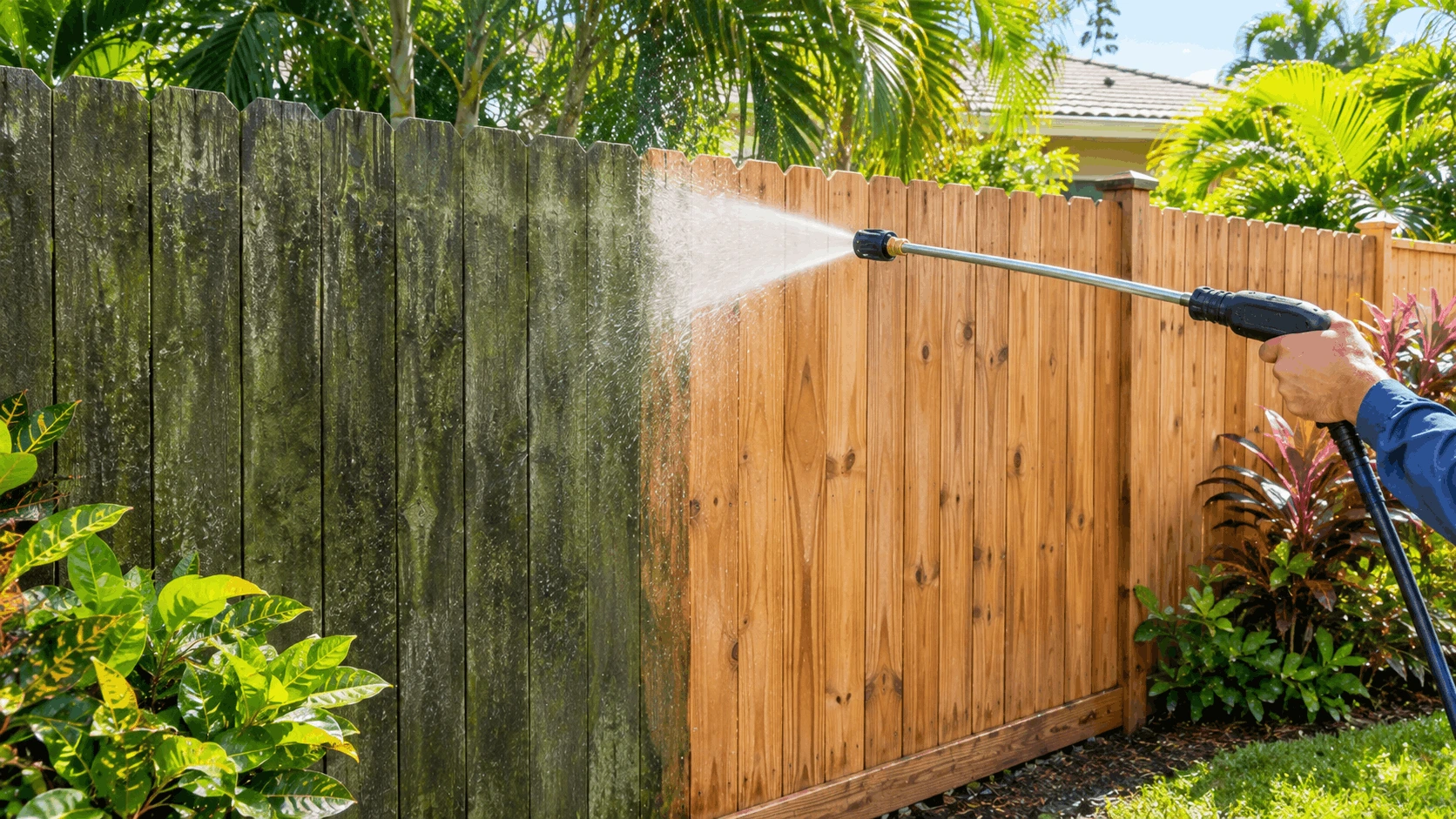
The wash is only the first half. A clean, dry deck is ready to take a stain or sealer that keeps mold from returning and protects against sun. The wood needs to dry, usually a day or two in sunny weather and longer in the rainy season, before any finish goes on. We cover the timing in how long to wait after pressure washing before painting, staining or sealing, and the typical cost factors in our roof, deck and fence pricing guide.
A small, sturdy deck is a fair DIY job. Call a professional if the wood is old or splintering, if the deck is raised and hard to reach safely, if the fence is tall or ageing, or if there is heavy black mold or rust staining. A crew brings the right cleaners, brightener and soft-wash equipment, and can spot rot and loose fasteners that need repair before washing makes them worse.
Wood and composite reward patience. Use a wide tip, low pressure, the right cleaner and a little time, and a tired deck can look years younger without a single scar. If you would like an expert to do it, send us photos and we will tell you what your deck and fence need.
The factors that shape a quote for decks and fences.
How long to let the wood dry before you finish it.
What is safe, and what to seal, around your pool deck and patio.

We restore driveways, roofs, patios, pool decks and commercial properties across South Florida from our base in Sunrise, FL. Free, no-obligation quotes: call (954) 405-6642 or request a quote online.
Send us your address and a few photos. We will come back with a clear, no-obligation price.
Request a Free QuoteCall (954) 405-6642WhatsApp UsServing Sunrise, Plantation, Pompano Beach, Fort Lauderdale, Deerfield Beach and nearby cities.Send us photos of your deck or fence. We will tell you the safest way to clean it and give you a clear price in writing, free and with no obligation.