What a pressure washer can and cannot lift: peeling paint, rust, oil and graffiti, on which surfaces, at what pressure, and when chemistry does the real work.
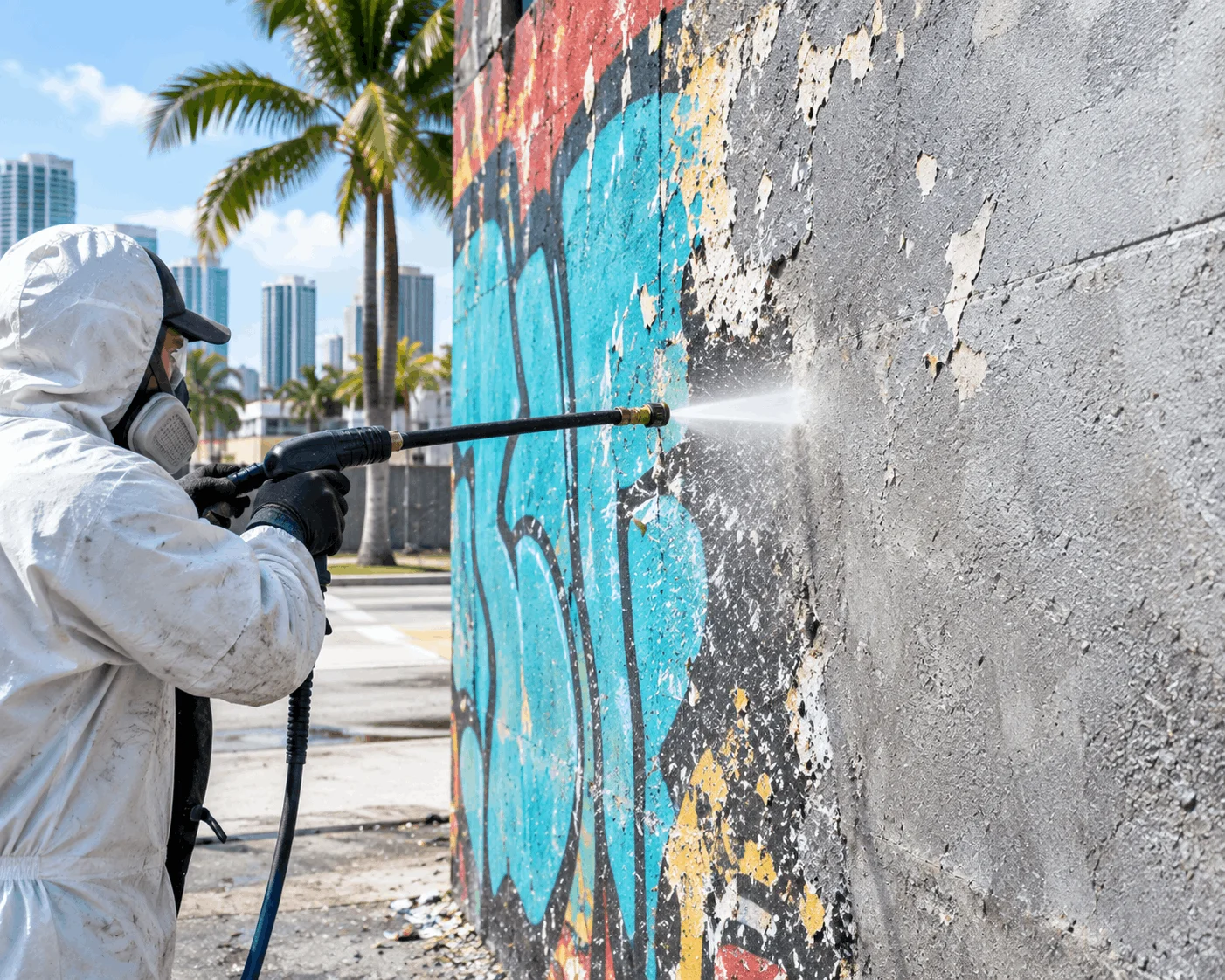
A pressure washer removes loose, peeling paint and light graffiti well, but it does not strip firmly bonded paint without damaging the surface. For rust and oil, water pressure alone will not work; you need a rust remover (acid-based) or a degreaser and dwell time. Use 2,500 to 3,500 PSI on hard surfaces like concrete, and much lower on wood or brick, and always test a small area. Paint on homes built before 1978 may contain lead, so take extra precautions.
Pressure loosens; chemistry removes. That rule is behind almost every successful stain and paint job we have done.People ask us the same question all the time: can a pressure washer just blast that paint off? The honest answer is sometimes, and rarely as cleanly as you hope. We have removed peeling paint from block walls, graffiti from storefronts, rust from driveways and oil from garage floors across South Florida, and every one of those jobs comes down to matching the tool to the material.
Below you will find what a pressure washer can lift, what needs chemistry, and where you risk making things worse. If you would rather have help, see our services.
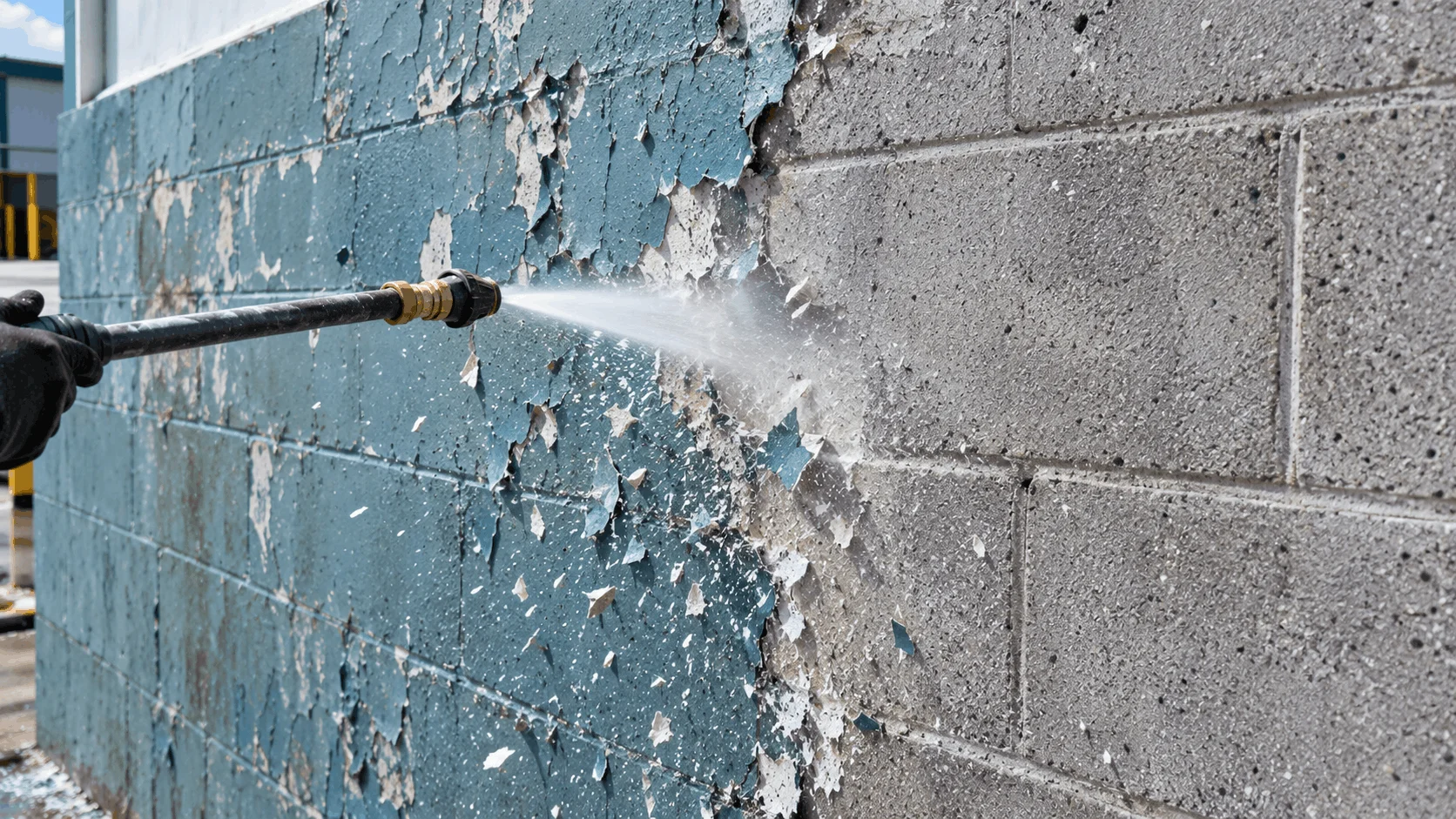
Pressure removes what is loose or sitting on top of a surface. Paint that is chipped, flaking or chalky comes away, and so does dirt, mold and light graffiti. What it does not do well is remove paint that is still bonded, or stains that have soaked into porous material. Those need chemistry, mechanical removal or both.
| Problem | Pressure alone? | What usually works |
|---|---|---|
| Loose or peeling paint | Yes, with a wide tip | Pressure, then scrape and sand the edges |
| Well-bonded paint | Not without damage | Chemical stripper or mechanical removal |
| Fresh graffiti | Sometimes | Graffiti remover, then pressure rinse |
| Old spray paint on porous surface | Rarely | Solvent-based remover and hot water |
| Rust stains | No | Acid-based rust remover, then rinse |
| Oil and grease | No | Degreaser, dwell time, hot-water rinse |
The most common request is a house or fence. Before you do anything, check what you are stripping. On pre-1978 homes, paint may contain lead, and blasting it spreads chips and dust in your yard. In that case, hire a certified professional.
These surfaces handle more pressure. Around 2,500 to 3,500 PSI with a 15 to 25-degree tip is typical for paint on concrete, kept at a steady distance. A rotary tool speeds the work, and a chemical stripper applied first helps with bonded coats.
Wood is soft, and a pressure washer that removes paint will also tear the grain. Keep to low pressure and a wide tip, and expect to scrape and sand the rest. Full stripping of siding or trim is typically a chemical or mechanical job.
Both are porous, and paint sinks into them. Aggressive blasting damages mortar and stucco. Soft washing and a specialty stripper are safer.
Rust is iron oxide, and it bonds to porous surfaces. Pressure will only rinse the loose flakes. You need an acid-based remover, such as oxalic or phosphoric acid, applied, left to dwell and then rinsed. Do not use bleach on rust, because it can turn the stain darker and set it in.
Cover fresh oil with cat litter or absorbent powder, wait, and sweep it up.
Apply a concrete degreaser and scrub with a stiff brush.
Give the product 15 to 30 minutes, keeping it damp.
Rinse with a pressure washer, ideally with hot water, and repeat if needed.
Older oil has soaked into the concrete, so a shadow may remain even after a good treatment. Professionals use hot-water machines and stain-specific products for these jobs. We describe the process on driveways in our guide on how to pressure wash a concrete driveway.
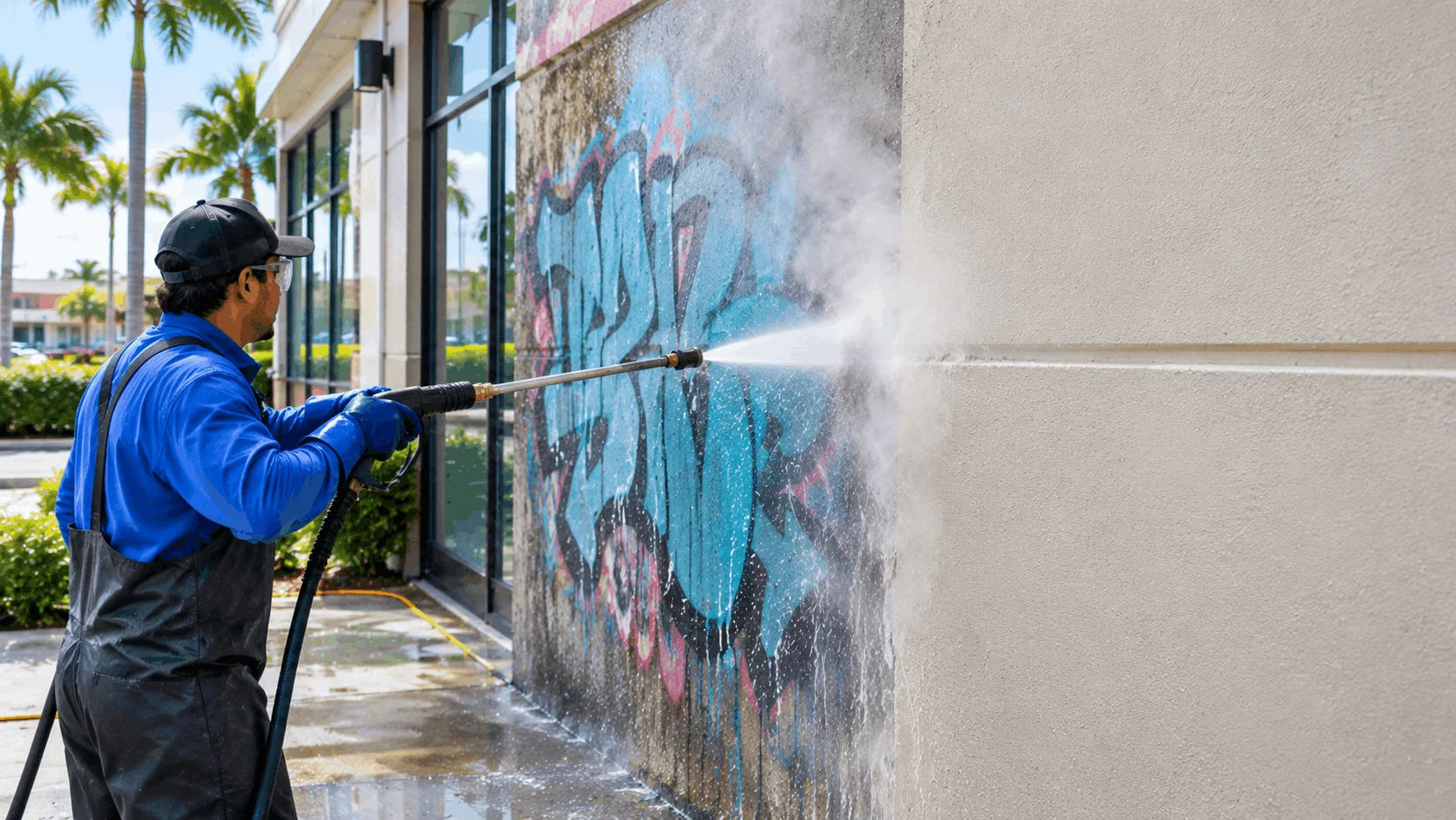
Graffiti removal is about surface. On smooth, sealed surfaces, a graffiti remover and low-pressure rinse works well. On rough concrete, brick or stucco, paint sinks in, and you may need hot water, a solvent or repeated treatments. Aggressive blasting can scar the wall and leave a ghost that looks worse than the tag. If it is a business wall or storefront, a professional can usually finish it in one visit. See our commercial pressure washing guide for how that works.
A crew is worth it when the surface is delicate, the stain is old, the paint is lead-suspect or the area is large. We bring hot-water equipment, stain-specific products and the containment that keeps chips and runoff off your lawn. Tell us what you are dealing with through our free quote form.
Pressure is a great tool for loosening and rinsing, but it is a poor tool for bonded paint or deep stains. Pair it with the right chemistry, protect the surface, and be honest about when it is a professional job.

We restore driveways, roofs, patios, pool decks and commercial properties across South Florida from our base in Sunrise, FL. Free, no-obligation quotes: call (954) 405-6642 or request a quote online.
Send us your address and a few photos. We will come back with a clear, no-obligation price.
Request a Free QuoteCall (954) 405-6642WhatsApp UsServing Sunrise, Plantation, Pompano Beach, Fort Lauderdale, Deerfield Beach and nearby cities.Send us a photo. We will tell you what will lift it and what will not, and give you a clear price in writing, free and with no obligation.