What pressure vinyl siding and stucco can really take, why soft washing is usually the safer answer, and how to avoid pushing water behind your walls.
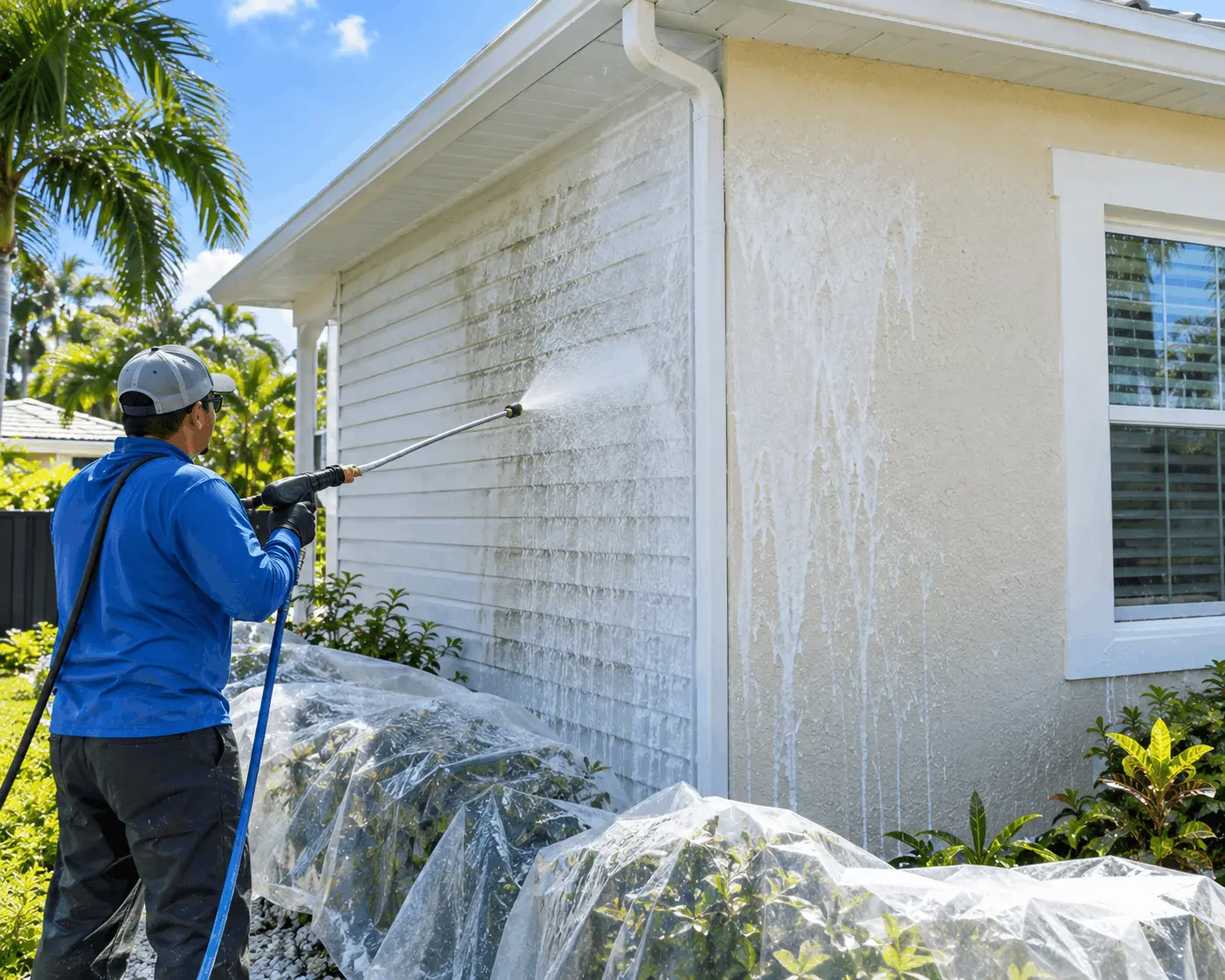
Yes, you can pressure wash vinyl siding and stucco, but only gently. Keep pressure low (well under 1,500 PSI for vinyl), use a wide 25 to 40-degree nozzle from a safe distance, and spray straight or slightly downward, never up under the laps. Stucco is porous and easy to gouge, so it is usually soft washed with a cleaning solution at very low pressure instead. Water forced behind either surface can cause hidden moisture and mold.
Most South Florida homes are stucco, so this is the surface we wash most often.If there is one lesson we wish every homeowner learned before buying a pressure washer, it is this: siding and stucco are not driveways. They look tough, but they are thin, they are not fully sealed and they are attached to a wall with air and framing behind them.
We wash both types constantly across Broward and Palm Beach counties. This guide explains how each surface behaves, what pressure and nozzle to use, how to clean algae and chalky residue without damage, and when soft washing is the smarter path. If you would like a professional to look at your walls, our residential washing team can help.
| Feature | Vinyl siding | Stucco |
|---|---|---|
| Structure | Overlapping panels (laps) with gaps at the bottom edge | Cement-based coating, porous and often painted |
| Main risk | Water forced behind the laps, cracking older panels | Gouging, cracks widening, water absorbed into the wall |
| Common dirt | Algae, mildew, chalky oxidation | Green and black algae, mildew, rust streaks |
| Best method | Soft wash or gentle pressure wash | Soft wash with a low-pressure rinse |
| Nozzle | 25 to 40 degree | 40 degree or a soft-wash tip |
Vinyl is designed to shed water, but it does not seal like a sheet. Stucco absorbs water like a sponge, then dries out. Both fail the same way when misused: water gets behind the surface, and the moisture problem appears months later.
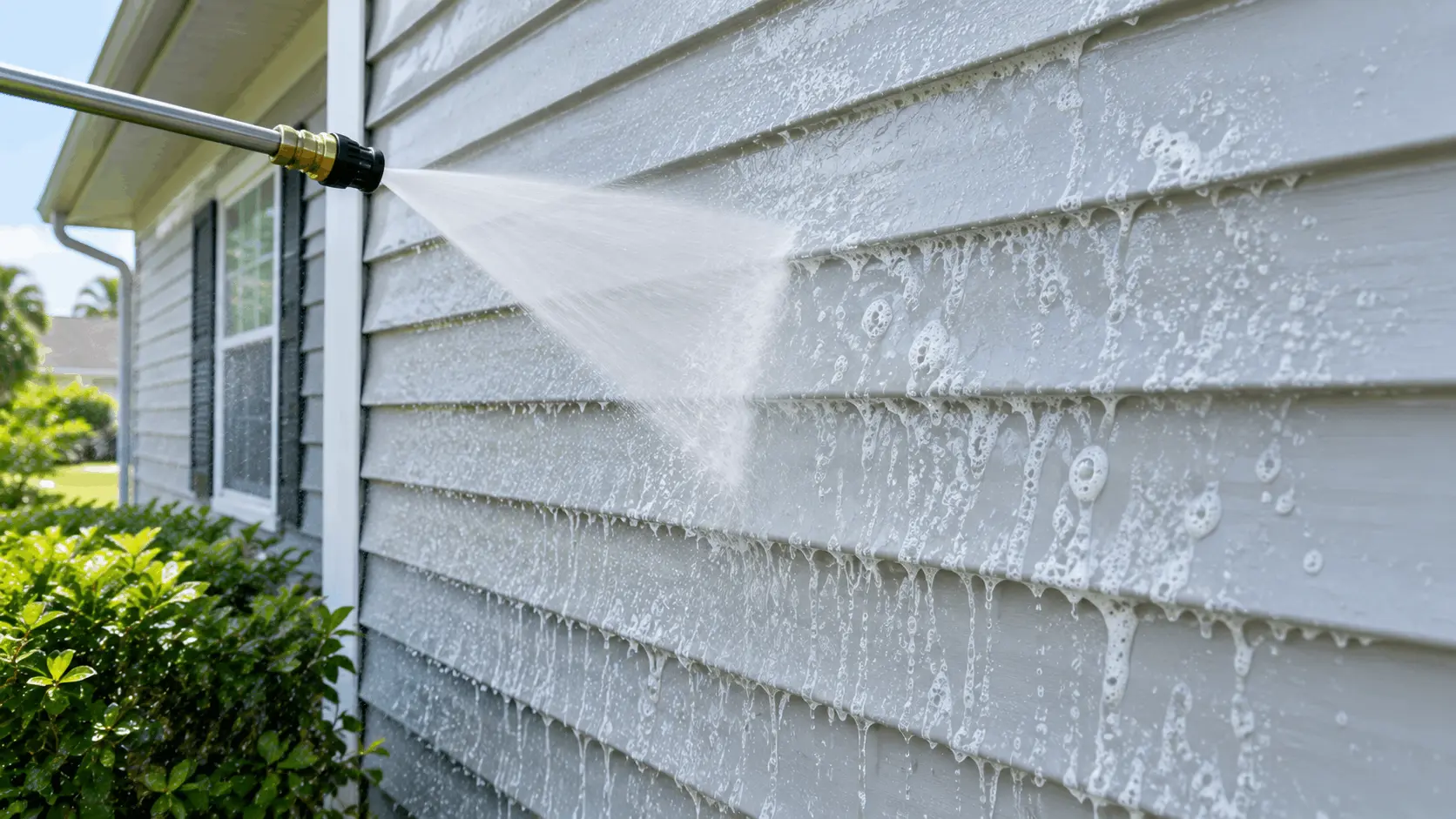
Close windows, cover outlets and rinse plants. Check for cracked or loose panels first.
Use a siding-safe detergent or soft-wash mix, working bottom to top on a small section at a time.
Use a 40-degree tip at a slight downward angle, moving with the direction of the panels.
Rinse from top to bottom until all cleaner is gone, then check for streaks.
Keep the spray angle level or slightly down. When water is pushed up under the bottom lip of a panel, it runs behind the siding, where it can soak insulation and sheathing. That moisture can hide for a year and then show up as mold or a soft spot.
Oxidation, the powdery chalk you sometimes see on older siding, is not dirt. It is the surface breaking down from years of sun, and a harder wash will just remove more of it. A gentle wash and a siding-safe cleaner is all you can do.
Stucco is the surface most people ask us about, and the answer is almost always the same. Do not blast it. Stucco is a cement-based coating that is porous and often already carrying hairline cracks. A narrow tip at high pressure can gouge a pattern into it, widen cracks and drive water into the wall, and painted stucco can lose its paint in patches.
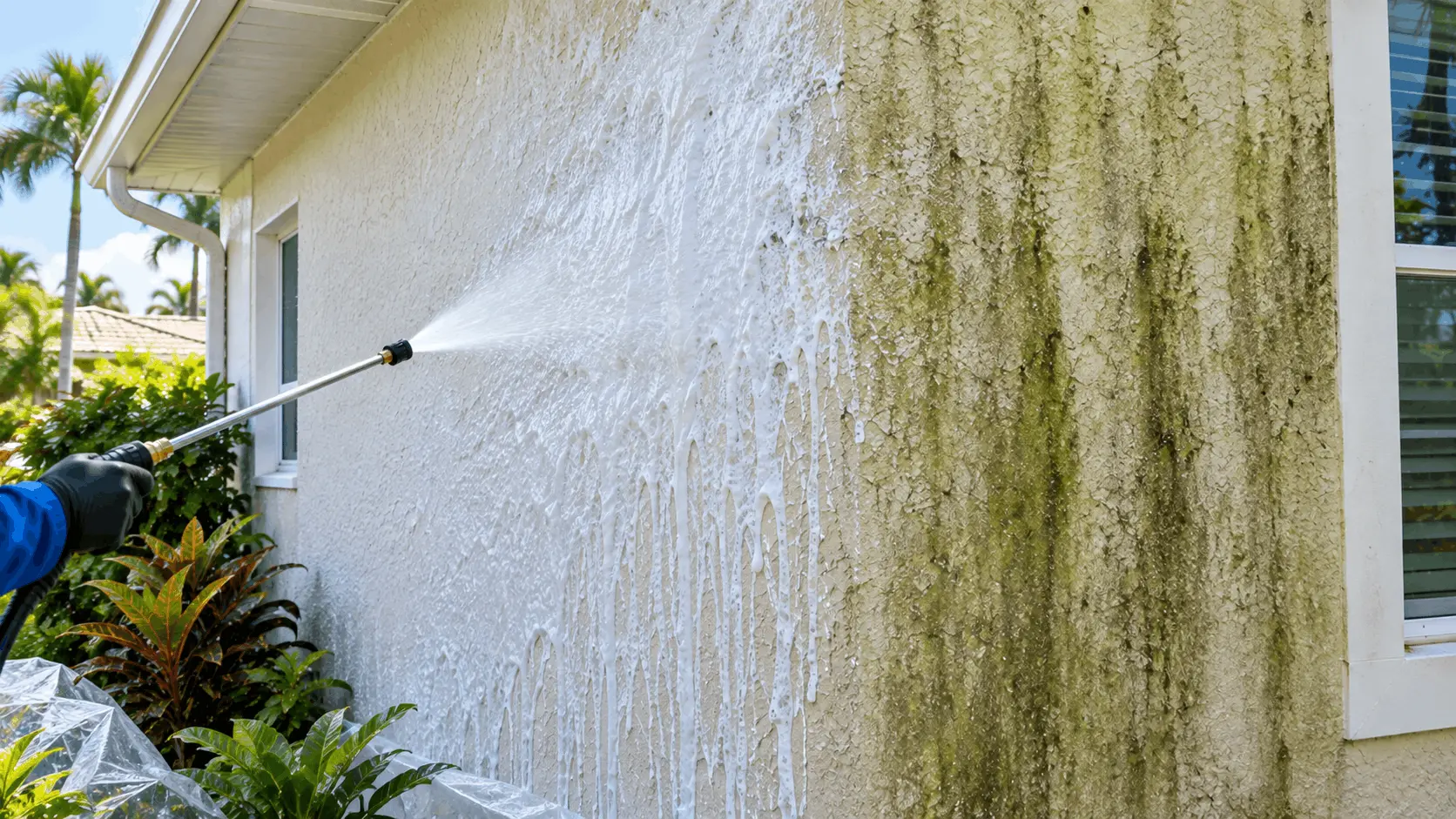
Most of what you see on Florida walls is algae and mildew, and it does not come off with water alone. The standard approach is a sodium hypochlorite based solution with a surfactant, which clings to the wall, kills the growth at the root and rinses away at low pressure. Rust stains need an acid-based rust remover, and efflorescence, the white mineral crust, needs a mild acidic cleaner and a dry brush. Our guide to bleach vs soft-wash solutions for mold and algae goes deeper into strengths and safety.
For the full picture of how each method compares, see soft washing vs pressure washing vs power washing. For a step-by-step on the whole exterior, read how to pressure wash a house.
Most stucco homes and every two-story home fall into the category where we would recommend a professional. A crew has soft-wash equipment that applies a controlled amount of solution and a low-pressure rinse, and the experience to recognize cracks, failed caulk and hidden moisture before they turn into a repair bill. To see how we handle it, browse our recent work or ask for a free quote.
The safest way to clean vinyl siding and stucco is the gentlest one that works. Low pressure, a wide nozzle, the right solution and patience will always beat force. If your walls are due for a clean, we would be happy to help.

We restore driveways, roofs, patios, pool decks and commercial properties across South Florida from our base in Sunrise, FL. Free, no-obligation quotes: call (954) 405-6642 or request a quote online.
Send us your address and a few photos. We will come back with a clear, no-obligation price.
Request a Free QuoteCall (954) 405-6642WhatsApp UsServing Sunrise, Plantation, Pompano Beach, Fort Lauderdale, Deerfield Beach and nearby cities.Send us your address and a couple of photos. We will match the method to your walls and give you a clear price in writing, free and with no obligation.