A step-by-step method for cleaning concrete without zebra stripes, plus how to lift oil, rust and green algae stains the way South Florida driveways actually get dirty.
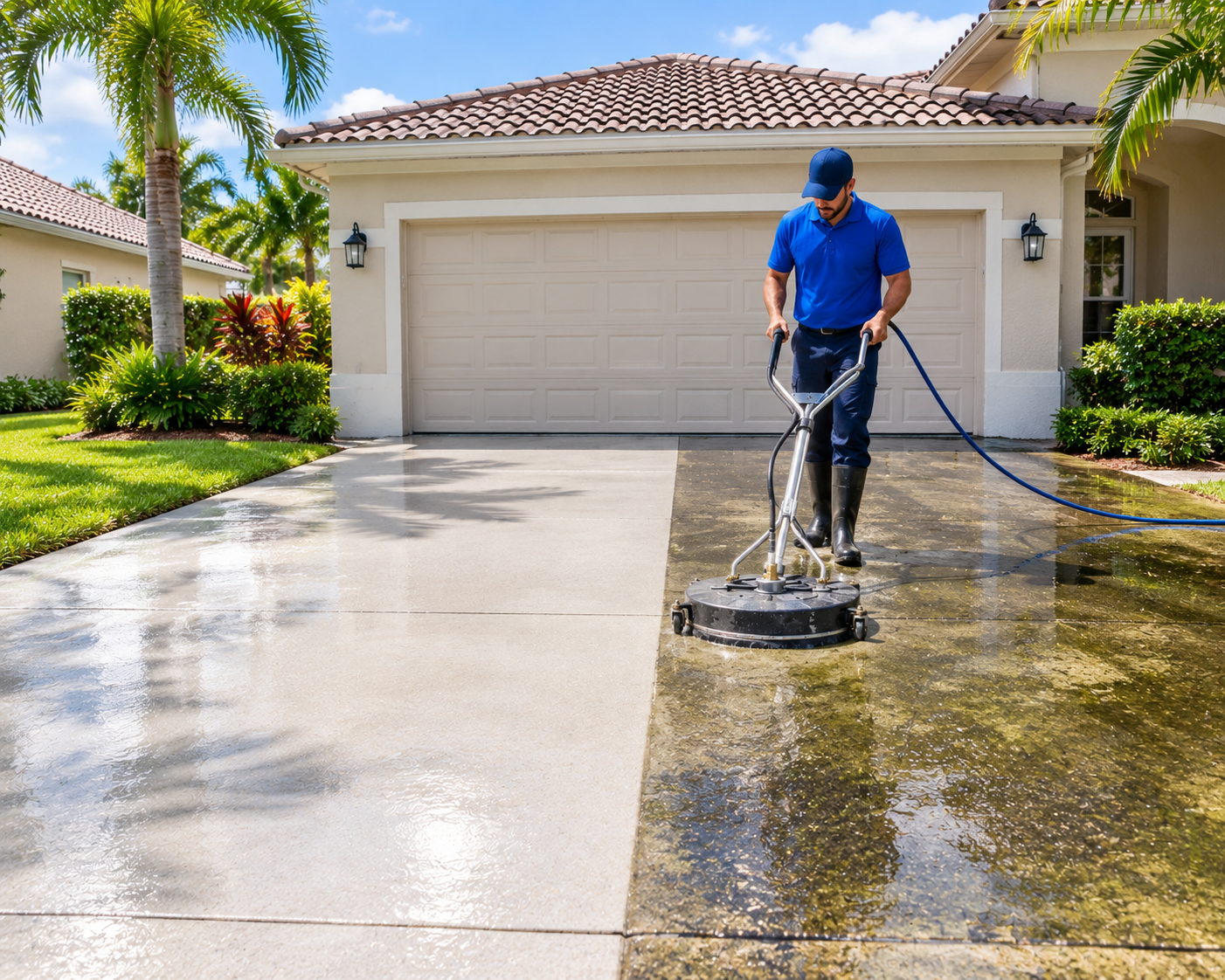
To pressure wash a concrete driveway, sweep it, pre-treat oil and algae, then clean with 2,500 to 3,500 PSI and a rotary surface cleaner (or a 25-degree nozzle held 8 to 12 inches away) in overlapping passes. Rinse from the house side toward the street, then let it dry fully before sealing. Oil needs a degreaser and dwell time, and rust needs a rust remover, because plain water will not lift either one.
A typical two-car driveway takes a careful DIYer a few hours. A crew with a surface cleaner usually finishes much faster.Every driveway in South Florida tells the same story after a few summers. The gray turns green in the shade, black in the sprinkler zone, and orange wherever the irrigation water carries iron. Then someone parks a leaky truck on it, and you have a project.
We have cleaned a lot of driveways across Broward and Palm Beach counties, and we have also been called in to fix the ones that were washed badly the first time. This guide walks you through the way we do it, what to buy or rent, which mistakes leave permanent marks, and when it is smarter to hand the job to a professional. If you want the short version of who does this for a living, see our residential pressure washing service.
Concrete is tough but it is not indestructible. It is a porous, cement-based surface, and the wrong tip or too much pressure will etch the top layer and leave lines you cannot wash away. Good preparation is 80 percent of a clean result.
| Item | What to look for | Why it matters |
|---|---|---|
| Pressure washer | 2,500-3,500 PSI, 2.5-4 GPM | Enough power for concrete without cutting it; flow rate (GPM) matters as much as PSI |
| Surface cleaner | Rotary attachment, 15-20 inch | Gives an even finish and avoids zebra stripes; far faster than a wand |
| Nozzles | 25-degree (green) and 40-degree (white); soap nozzle | Wide fan angles protect the surface; the black soap nozzle applies detergent at low pressure |
| Degreaser | Concrete-safe, oil-based stain formula | Breaks the bond of oil so it can be rinsed out |
| Algae treatment | Sodium hypochlorite solution or a Florida-safe outdoor cleaner | Kills the algae at the root so it does not return in a few weeks |
| Safety gear | Closed-toe boots, eye protection, long pants | Runoff and spray bounce back farther than most people expect |
| Push broom and hose | Stiff bristles, garden hose | Clears debris first and rinses plants before and after |
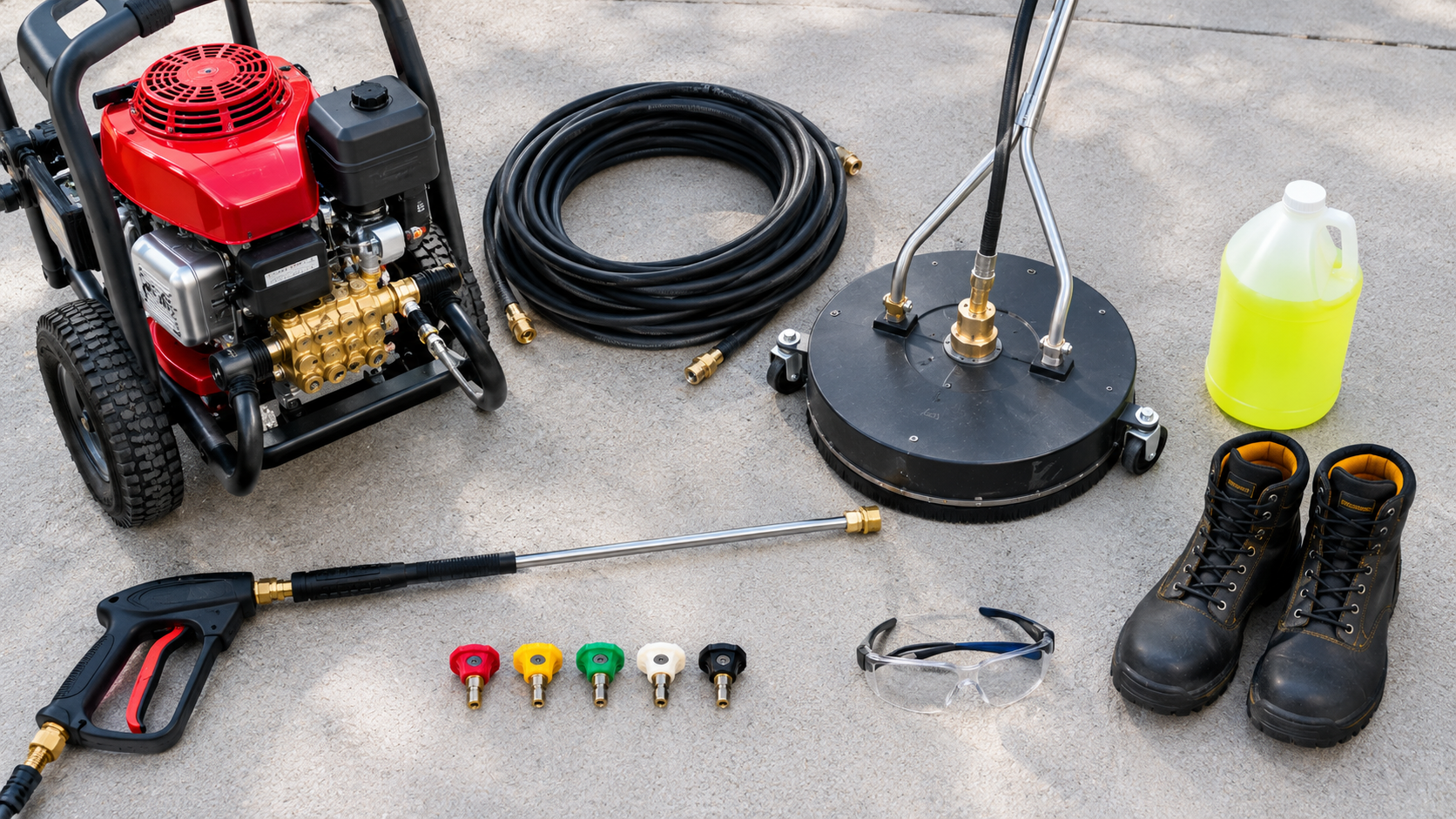
The number that gets talked about the most is PSI, but two settings decide whether your driveway ends up clean or striped: the nozzle angle and the distance from the surface. A 0-degree red tip is a cutting tool. It can carve a line into concrete in a second, so leave it in the drawer.
If you are using a wand, keep it 8 to 12 inches from the concrete and move in a smooth, steady sweep. Pausing in one place is how zebra stripes happen. A rotary surface cleaner removes that risk because it spins the jets in a circle at a fixed height, and it is the single best upgrade for a DIY driveway job.
Here is the sequence we follow, adapted for a homeowner with a rented or owned machine.
Move cars, planters and toys, then sweep or blow off loose sand and leaves. Wet nearby plants with a hose to protect them.
Apply degreaser to oil spots and an algae treatment to green or black areas. Let it dwell 10 to 15 minutes, and never let it dry.
Work in sections about 3 feet wide with the surface cleaner or 25-degree nozzle, overlapping each pass by a few inches.
Rinse from the house side toward the street so dirty water does not run back onto cleaned concrete, then look for spots that need a second pass.
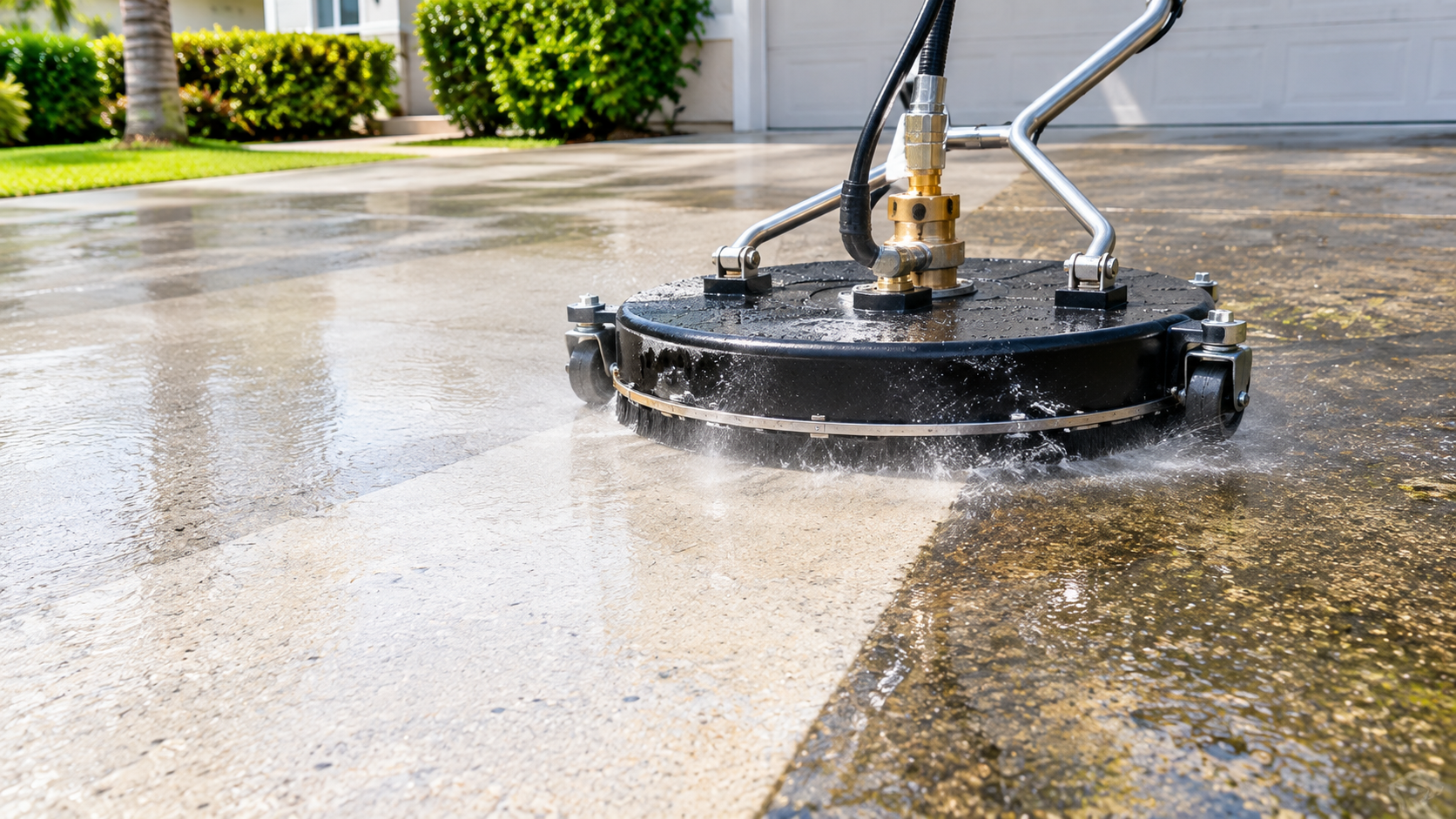
This is where most DIY attempts stall. Plain water and pressure will make the surface look better, but it rarely takes out the stain itself. Concrete is porous, so a stain is something that has soaked in, and it needs to be pulled out with the right product.
| Stain | Usual cause | What works |
|---|---|---|
| Oil and grease | Leaking engines, dropped motor oil | Fresh: cat litter or absorbent powder first. Set-in: degreaser, scrub, hot-water rinse; repeat if needed |
| Green or black growth | Algae, mildew and lichen in shaded, humid areas | Sodium hypochlorite solution applied with low pressure, then a gentle rinse |
| Orange or rust-brown streaks | Iron in irrigation or well water | Rust remover (oxalic or phosphoric acid based); regular detergent will not touch it |
| Brown leaf marks | Tannins from leaves and palm fronds | Detergent and a surface-cleaner pass; may need an oxidizing cleaner |
| Tire marks | Rubber transfer from hot tires | Degreaser and scrub brush, then a pressure rinse |
| White chalky patches | Efflorescence (mineral salts) | Dry scrub and a mild acidic cleaner, then rinse well |
For older oil, do not be surprised if a faint shadow remains. Oil that has been in the concrete for years sometimes needs two or three treatments or a hot-water pass, and a professional with a hot-water machine has a real advantage on those jobs. If your driveway has a lot of deep staining, you can see the type of work we handle on our gallery.
One more caution for newer driveways. Decorative or stamped concrete, and concrete under 28 days old, can be damaged by high pressure. If your surface has a colored stain or an exposed aggregate finish, test a small hidden area first or call a professional.
A clean driveway is at its most porous, which makes it a good moment to seal it. A penetrating sealer helps repel oil and water, slows algae growth and makes the next wash easier. Give the slab time to dry first. In our humid climate that usually means at least 24 to 48 hours of dry weather, and longer in the rainy season, because sealing damp concrete traps moisture and can leave a cloudy finish. If you plan to seal, read our guide on how long to wait after pressure washing before painting, staining or sealing.
A small, flat, lightly soiled driveway is a reasonable DIY weekend if you already own a machine. Once you are renting equipment, buying a surface cleaner, treating heavy algae and dealing with rust or oil, the savings shrink quickly and the risk goes up. A professional brings a commercial surface cleaner, the right chemistry and the speed to finish before the concrete dries unevenly. We break down the trade-offs in our pressure washing cost guide and in what a driveway wash costs.
If oil, rust or years of algae are involved, a pro with hot water and stain-specific products saves you repeat passes.
More area and more slope means more time and more chance of streaks; a surface cleaner and experience matter.
Stamped, colored or coated surfaces are easy to damage and are worth an expert's eye.
Rental, chemicals and cleanup add up; a crew is usually done in a fraction of the time.
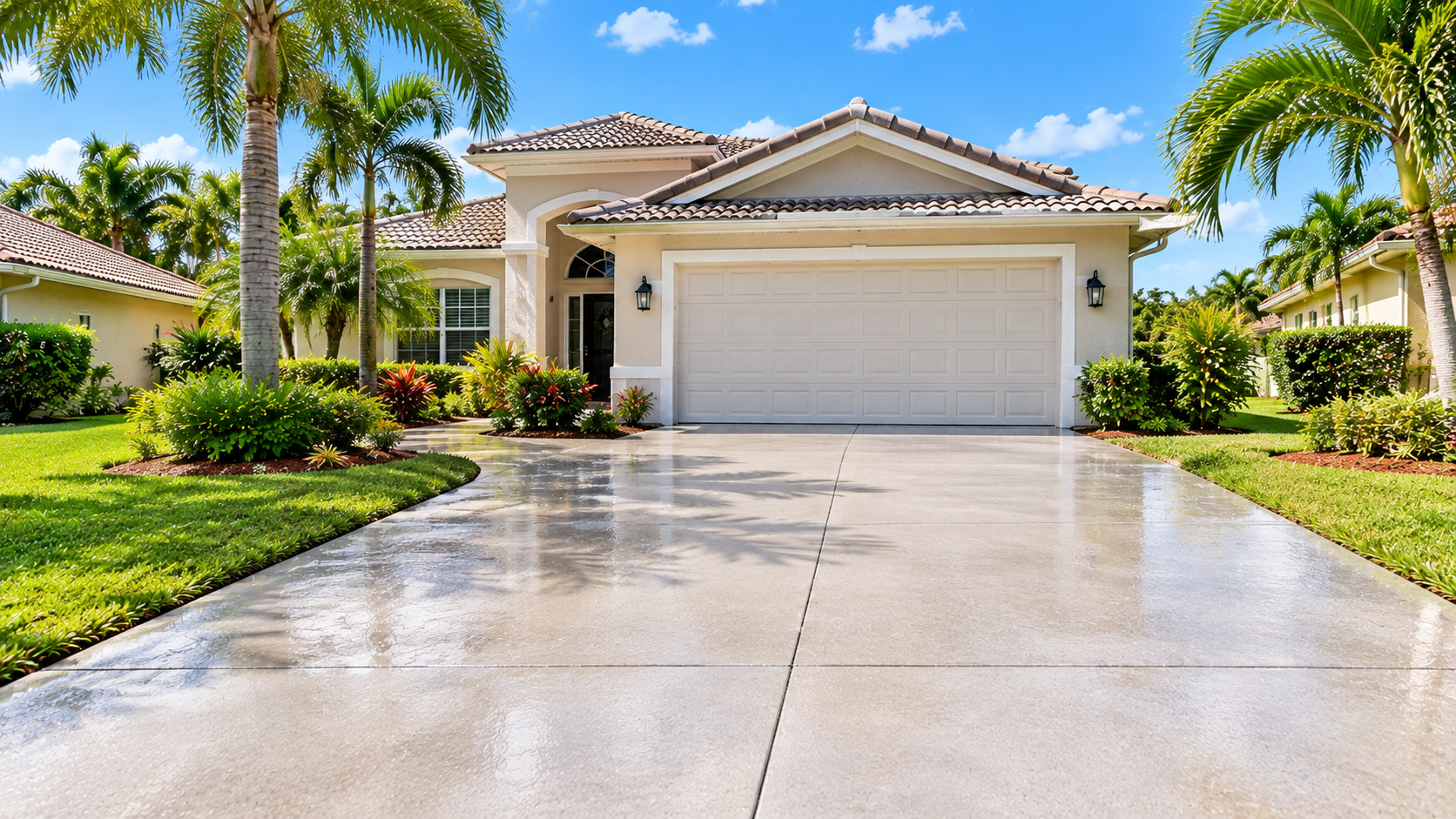
A clean driveway does more for curb appeal than almost any other outdoor chore, and the method is simple once you respect the concrete: the right nozzle, the right distance, and the right product for the stain. If you would rather skip the equipment, the stripes and the sore back, our team is happy to take it off your hands. Send us a photo of your driveway and we will tell you exactly what it needs.
See what changes a driveway quote and how to compare offers.
The right pressure and method for stucco, paint and siding.
See what a proper wash can do for tired concrete and walls.

We restore driveways, roofs, patios, pool decks and commercial properties across South Florida from our base in Sunrise, FL. Free, no-obligation quotes: call (954) 405-6642 or request a quote online.
Send us your address and a few photos. We will come back with a clear, no-obligation price.
Request a Free QuoteCall (954) 405-6642WhatsApp UsServing Sunrise, Plantation, Pompano Beach, Fort Lauderdale, Deerfield Beach and nearby cities.Send us your address and a couple of photos. We will tell you whether it needs a simple wash or stain treatment, and give you a clear price in writing, free and with no obligation.